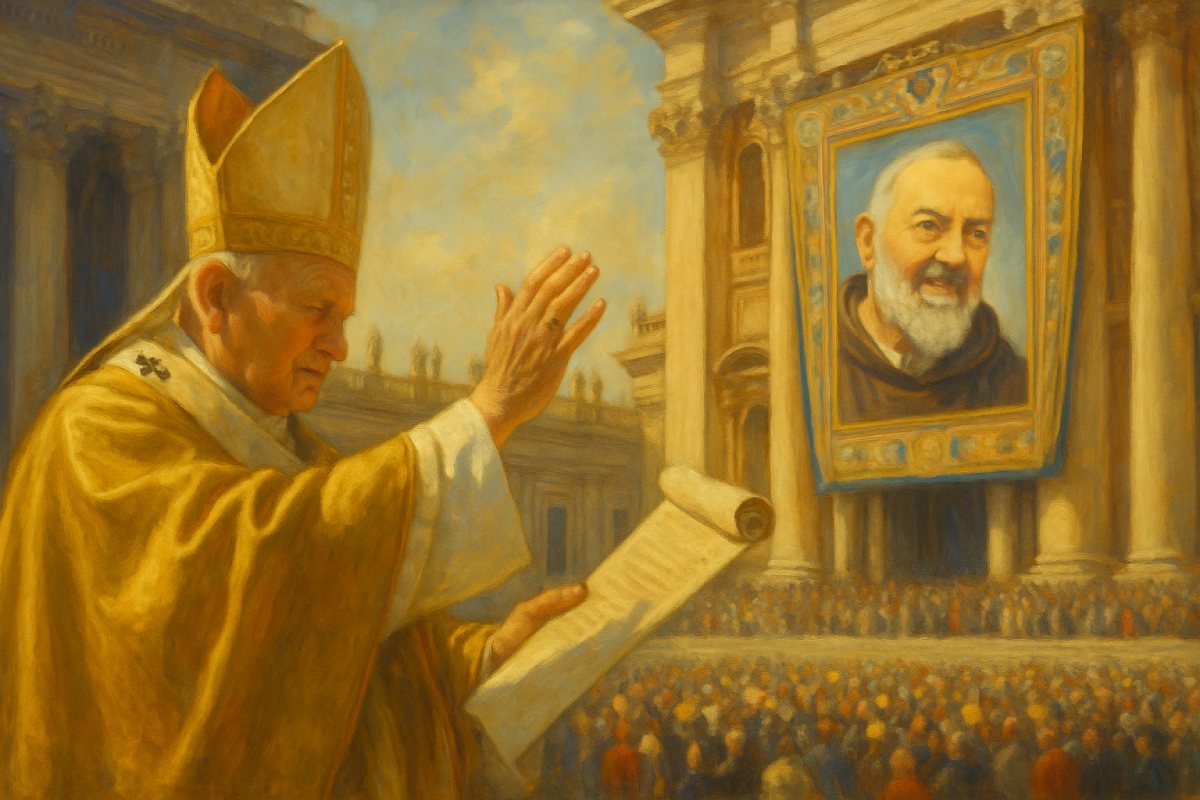
Beloved across the world for his humility, the confessional, and a life marked by the Cross, Saint Padre Pio of Pietrelcina (1887–1968) was officially recognized by the Church as a model of holiness through a meticulous, years-long process. Below is a clear, step-by-step look at how the Capuchin friar became first “Blessed” and then a canonized saint.
1) The Cause Opens: Servant of God
After Padre Pio’s death on September 23, 1968, the faithful pressed for his cause. The diocesan inquiry gathered testimonies, writings, and documentation on his life and virtues. With Rome’s acceptance of the cause, he received the title Servant of God, and the evidence was compiled for further study.
2) Heroic Virtue Declared: Venerable (1997)
Experts reviewed Padre Pio’s writings and witness accounts to judge his faith, hope, charity, prudence, justice, fortitude, and temperance. When the Pope formally recognized the constancy of these virtues, Padre Pio was declared Venerable, affirming his heroic Christian life.
3) One Miracle Confirmed: Beatification (May 2, 1999)
For beatification, a miracle attributed to Padre Pio’s intercession—thoroughly examined by doctors, theologians, and the Holy See—was required. With one scientifically inexplicable healing approved, Padre Pio was proclaimed Blessed on May 2, 1999 by Pope Saint John Paul II.
4) A Second Miracle: Canonization (June 16, 2002)
Canonization typically requires a second post-beatification miracle verified with the same rigor. After the Church confirmed another healing through Padre Pio’s intercession, Pope Saint John Paul II declared him a Saint on June 16, 2002, inscribing his name in the canon of saints for veneration by the universal Church.
5) What Canonization Means
- Universal veneration: Public liturgical honor is permitted worldwide.
- Feast day: Padre Pio’s memorial is kept on September 23.
- Model and intercessor: The Church proposes him as an example of holiness and a powerful intercessor before God.
A Living Legacy
From the confessional in San Giovanni Rotondo to the “Home for the Relief of Suffering,” Padre Pio’s witness continues to draw souls to Christ. His journey from Servant of God to Saint shows how the Church carefully discerns sanctity, always seeking truth, prudence, and the unmistakable signs of God’s grace.