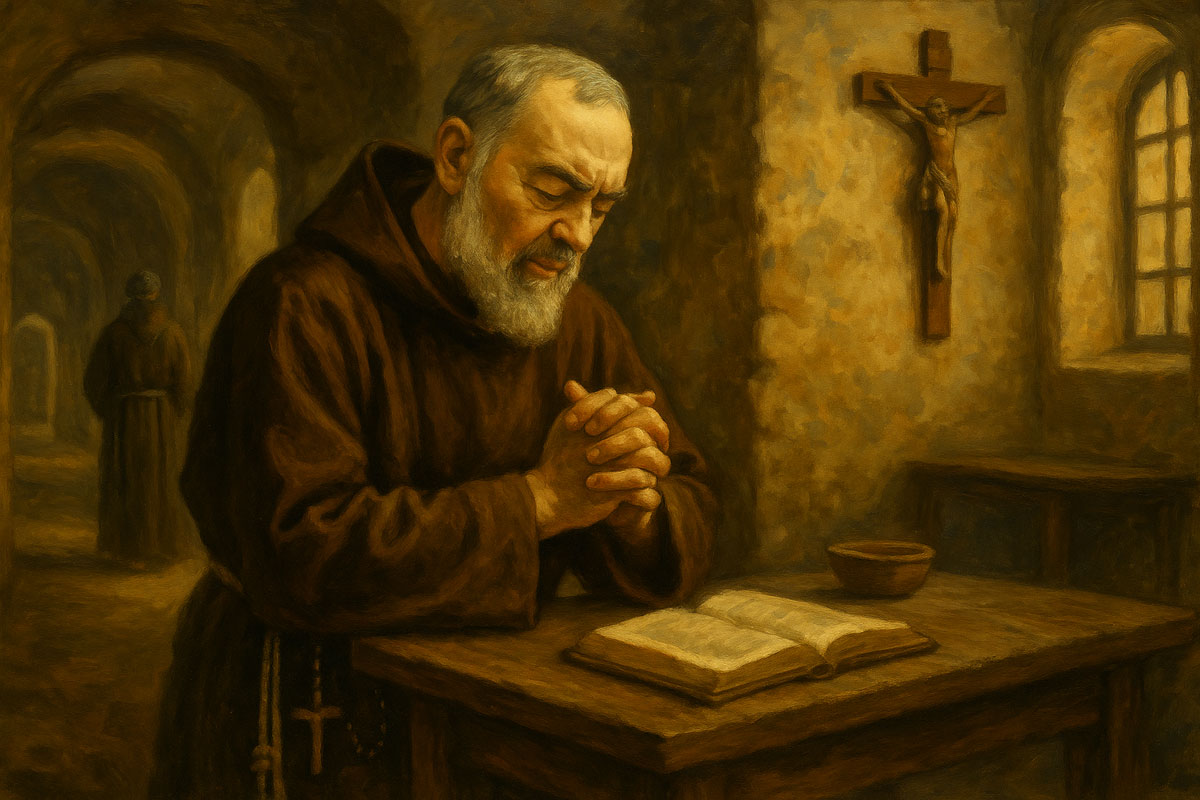
Before Padre Pio became known worldwide for his stigmata, miracles, and powerful ministry, he spent many years in relative obscurity within the walls of the monastery. These hidden years were marked by prayer, simplicity, and sacrifice, forming the foundation of his extraordinary spiritual life. Life inside the friary revealed the heart of a man who sought holiness not in recognition, but in quiet devotion to God and service to his brothers.
A Life of Prayer and Silence
For Padre Pio, the monastery was a school of sanctity. Much of his day was dedicated to prayer—hours spent in contemplation, devotion to the Rosary, and deep union with the Eucharist. Silence was a hallmark of his routine, allowing him to focus entirely on God. These years of hidden prayer became the wellspring of his strength, preparing him for the great trials and graces that would later define his mission.
Daily Life in the Monastery
The rhythm of monastic life was simple but demanding. Rising early for morning prayers, joining his fellow friars in the Divine Office, and participating in the communal meals formed the structure of each day. Padre Pio embraced these humble tasks with love, whether in the kitchen, the garden, or assisting with household chores. His obedience and humility shone through in every duty, reminding others that holiness is found in small, faithful acts.
Hidden Suffering and Spiritual Trials
Though outwardly ordinary, Padre Pio’s hidden years were also filled with suffering. He battled illness, spiritual trials, and even harassment from demonic forces. These challenges, far from discouraging him, deepened his reliance on prayer and his trust in God’s providence. In silence and sacrifice, he offered his struggles for the conversion of souls, a practice that defined his priestly mission in later years.
Brotherhood and Community Life
Life inside the monastery was not solitary but shared in fraternity. Padre Pio lived in close communion with his Capuchin brothers, bound by vows of poverty, chastity, and obedience. Despite his illnesses and spiritual struggles, he was known for his kindness, humility, and encouragement of others. His life in community reflected the joy of brotherhood rooted in Christ.
The Formation of a Saint
Padre Pio’s hidden years remind us that sainthood is often formed away from the spotlight. His time in the monastery shaped his character, nurtured his spiritual gifts, and prepared him for the public ministry that would later draw thousands of pilgrims. The cloistered years were a quiet preparation for a global mission, teaching him endurance, humility, and the primacy of prayer.
Conclusion
Padre Pio’s hidden years inside the monastery reveal that true holiness is born in silence, prayer, and sacrifice. Though unseen by the world, these years were essential in forming the saint we revere today. His example reminds us that in the hidden places of our lives—in daily duties, in moments of suffering, and in quiet prayer—we too can encounter God and grow in sanctity. The life of Padre Pio inside the monastery is a powerful call to seek holiness in the ordinary, trusting that God works most deeply in what is unseen.