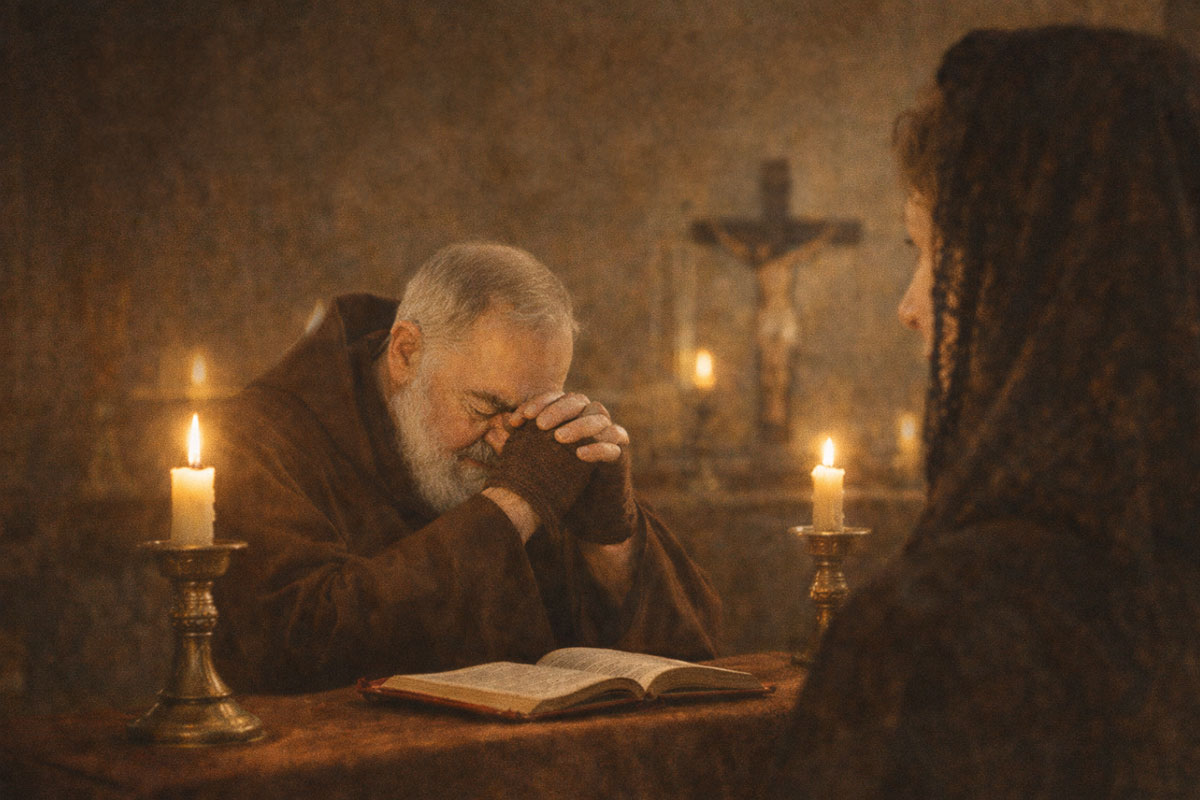
Mary Pyle spent years living close to Padre Pio, not as a public figure or spiritual teacher, but as a quiet observer entrusted with practical responsibilities. Among the most formative experiences of her life was simply watching Padre Pio pray.
Without instruction manuals or formal spiritual direction, Mary absorbed deep lessons by witnessing how Padre Pio approached God—lessons that shaped her own interior life and quiet holiness.
Prayer Rooted in Reverence
Mary Pyle observed that Padre Pio never treated prayer casually. Whether offering Mass, praying alone, or reciting familiar devotions, his posture and demeanor reflected deep reverence. Prayer was not something he rushed or adjusted to convenience.
From this, Mary learned that prayer is first an act of presence—standing humbly before God, attentive and receptive, rather than focused on productivity or emotion.
Faithfulness Over Feeling
Padre Pio’s prayer life was marked by perseverance rather than visible consolation. Mary noticed that even when prayer appeared physically exhausting or spiritually heavy, he remained faithful to it.
This taught her that prayer does not depend on comfort or inspiration. True prayer continues even when the soul feels dry, tired, or burdened, trusting that God works beyond what can be felt.
Silence as a Form of Trust
Much of what Mary learned came not from Padre Pio’s words, but from his silence. His quiet, absorbed attention before God revealed a trust that did not need constant explanation.
Mary came to understand that silence in prayer is not emptiness. It is often the soul resting in God, allowing Him to act without interference.
Prayer Joined to Suffering
Mary witnessed how Padre Pio carried physical pain, spiritual trial, and emotional weight into his prayer. He did not separate suffering from prayer, but brought it directly into God’s presence.
This taught her that prayer does not require escape from hardship. Instead, it becomes the place where suffering is offered, endured, and transformed through trust.
Humility Before God
Despite his spiritual gifts and responsibilities, Padre Pio prayed with deep humility. Mary observed no sense of self-importance—only dependence on God’s mercy.
From this, she learned that prayer is not about achieving holiness through effort alone, but about remaining small before God and allowing grace to do its work.
A Hidden School of Prayer
Mary Pyle never wrote formal teachings on prayer. Yet what she learned by watching Padre Pio pray shaped her entire spiritual life. She learned that prayer is lived quietly, faithfully, and without display.
Her example reminds us that some of the deepest spiritual lessons are learned not through instruction, but through attentive presence and humble observation.